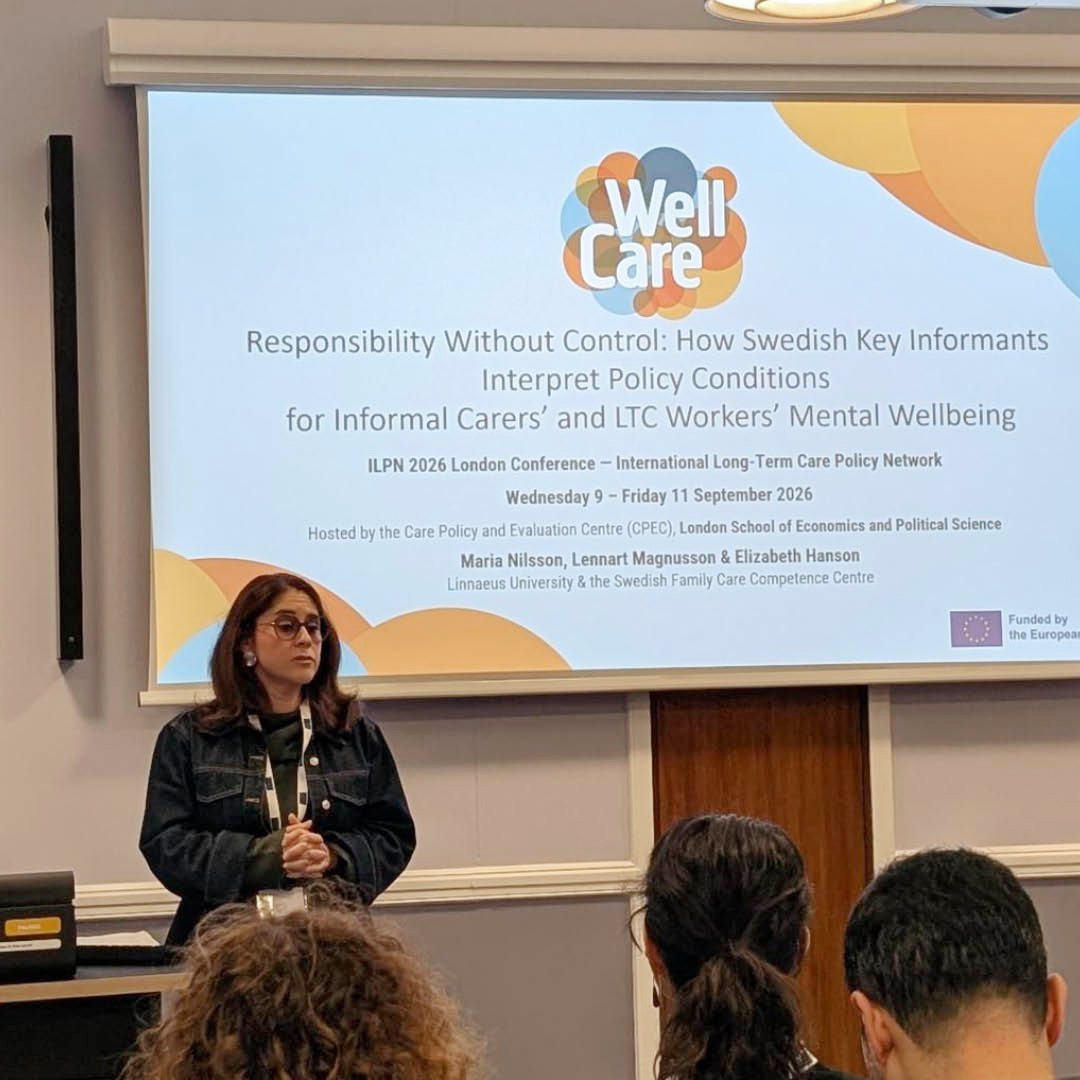
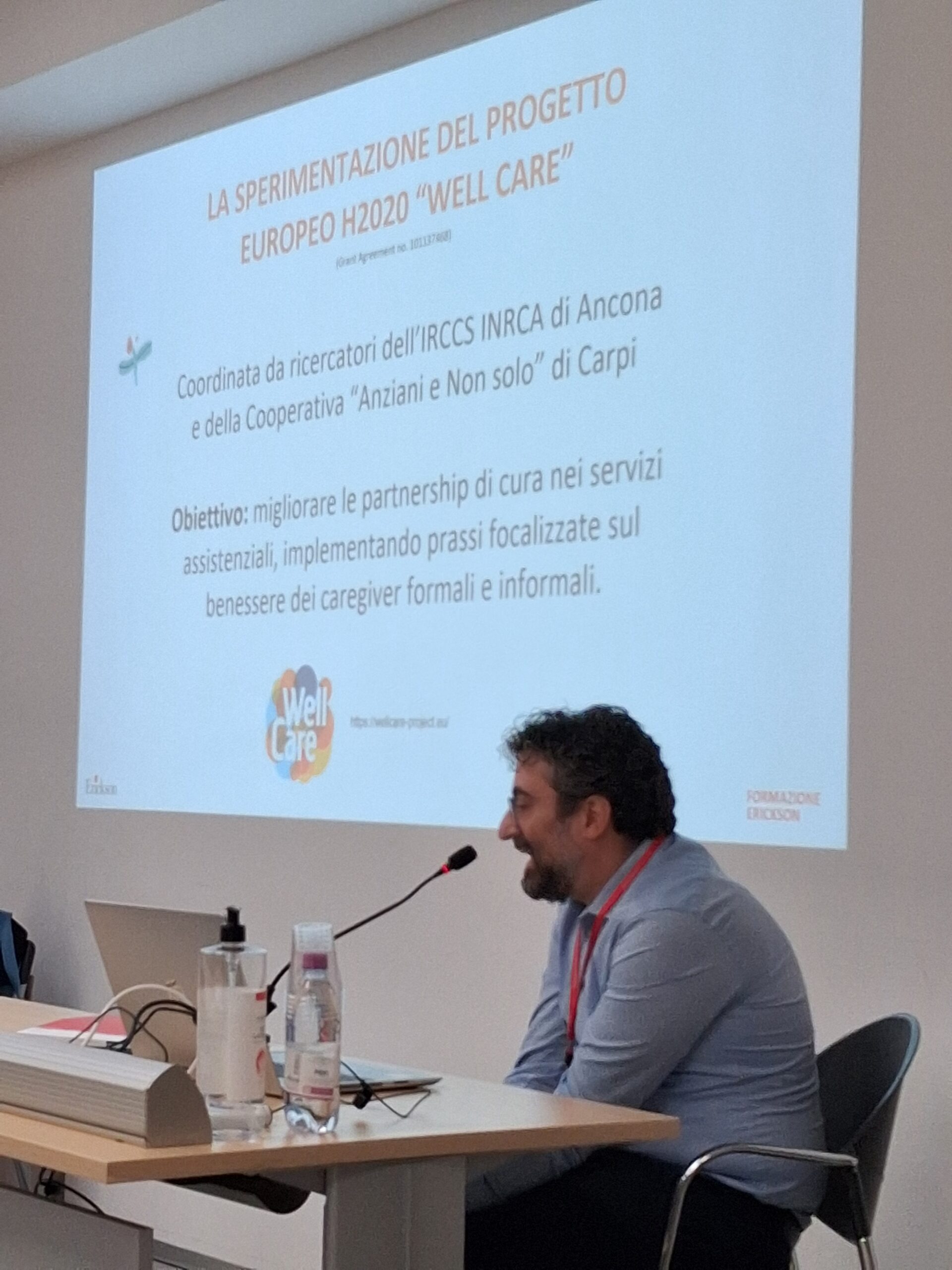
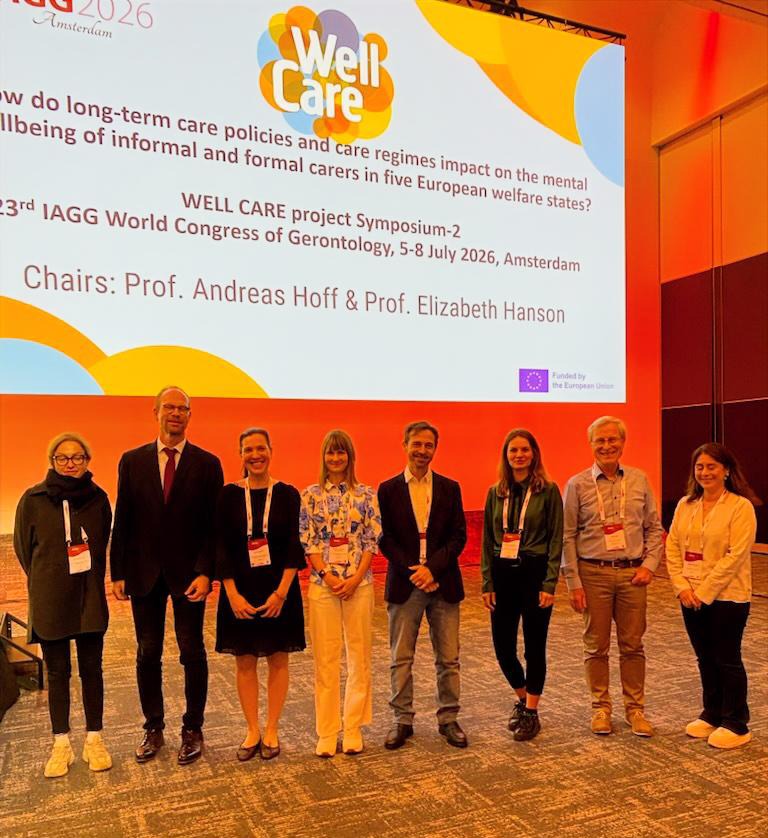
Maria Nilsson, Director of the Swedish Family Care Competence Centre (Nka), shared research from the…
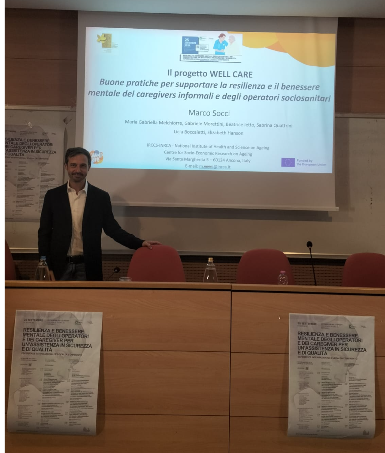
WELL CARE – highlighting the importance collaboration between formal and informal carers in Bergamo
Marco Socci presented the “WELL CARE” project at an event organised in Bergamo (Lombardy Region, Northern Italy) on 25 September 2026 together with our two sister Horizon Europe projects
On 25 September 2026, the event “Resilience and mental wellbeing of healthcare professionals and carers for safe and high-quality care: a comparison of international and local experiences” took place in Bergamo (Lombardy Region, Northern Italy). As part of the initiative, organised by the Bergamo Local Health Authority (ATS) with the support of “ProMIS” (i.e. an institutionalised network for the internationalisation of Italian public healthcare systems), and which took the form of a training session aimed at around 100 managers, professionals and social and healthcare workers from the Lombardy Region, three “twin” Horizon Europe projects (i.e. funded under the same call: HORIZON-HLTH-2023-CARE-04) were presented: “Support4Resilience”, “APOLLO2028” and “WELL CARE”.
In this regard, Marco Socci, from IRCCS INRCA in Ancona, presented the “WELL CARE” project and, in particular, its objectives, the consortium, the work packages, and some of its key findings, with particular focus on the review, selection and analysis of good practices supporting the mental wellbeing and resilience of long-term care (LTC) workers and family carers, as well as the 10 case studies of promising practices conducted across five European countries (Germany, Italy, the Netherlands, Slovenia and Sweden). The ongoing work was also presented, aimed at developing in Italy – based on research evidence and inputs from various stakeholders – a prototype of an innovative solution to promote care partnerships between LTC workers and family carers, to be implemented at two residential care facilities run by the “CADIAI social cooperative” in Bologna.
Overall, the presentation highlighted the importance of strengthening collaboration between formal and informal carers to promote their mutual wellbeing, thereby improving the quality of care provided to frail older people or to other individuals in need of LTC.
Related Posts